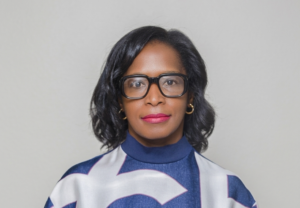
Bocar Ba on Building the Digital Architecture of African Nations

An Exclusive Interview with Bocar Ba, CEO of SAMENA Telecommunications Council
Q1. Looking at the rapid pace of technological change, how do you see Africa positioning itself in the global digital economy?
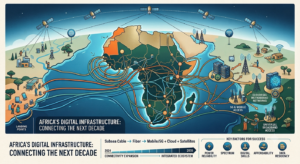
Bocar Ba: frica stands at a defining moment in its development. The continent has one of the world’s youngest populations, an entrepreneurial spirit that is second to none, and a recognition that digital technologies are becoming fundamental to economic growth and social progress.
For many years, our attention has understandably focused on expanding connectivity and improving access. That work remains essential. However, the conversation is now evolving. The real opportunity is now to build national capabilities that allow countries to innovate, compete and create lasting value.
Africa should not limit itself to just participate in the digital economy. It should help shape it through its talent, its innovation, its growing digital markets and its ability to develop solutions that respond to local realities while contributing to global progress.
Q2. You often speak about digital transformation. Do you believe the concept is changing?
Ba: Digital transformation has achieved a great deal. It has enabled governments to modernize services, businesses to improve efficiency and citizens to access new opportunities.
Today, however, the challenge is becoming more complex.
Artificial Intelligence, cloud, connectivity, data centers, cybersecurity, energy, digital finance and digital public infrastructure are no longer evolving independently. They influence one another.
This is why I believe our thinking must evolve. Success will depend less on individual digital projects and more on our ability to understand how these different capabilities interact and reinforce each other.
Digital transformation remains essential, but the next stage is about creating coherence across the entire digital ecosystem.
Q3. You recently introduced the idea of the “Digital Architecture of Nations.” What does it mean?
Ba: The Digital Architecture of Nations is a simple way of looking at a complex reality.
Every country is investing in digital infrastructure, Artificial Intelligence, cybersecurity, cloud, data, talent and innovation. Too often, however, these efforts are developed independently, even though they depend on one another.
The Digital Architecture of Nations encourages leaders to view these capabilities as parts of one national system. Connectivity supports cloud. Cloud enables AI. AI depends on compute, data and energy. Cybersecurity protects confidence. Skills sustain innovation. Investment accelerates progress. Institutions provide coordination.
When these elements evolve together, countries build stronger digital economies. When they evolve separately, progress often becomes fragmented.
Ultimately, digital success is not determined by the number of technologies a country adopts, but by how well those capabilities work together.
Q4. How does this relate to leadership?
Ba: Technology alone has never transformed a nation.
Leadership determines priorities. Institutions translate vision into action. Partnerships create scale. Investment accelerates implementation.
As we progress, leaders are expected to make decisions in environments where technology, economics, regulation, security and geopolitics intersect. This requires a broader way of thinking.
I often describe this as the evolution from digital transformation towards Institutional Intelligence.
Institutional Intelligence is the ability of governments and institutions to understand relationships, recognize interdependencies, coordinate across sectors and make decisions that strengthen the whole rather than optimize individual parts.
In many respects, this will become one of the defining leadership capabilities of the coming decade.
“Institutional Intelligence is the ability of governments and institutions to understand relationships, recognize interdependencies, and make decisions that strengthen the whole.”
Q5. International cooperation remains central to your work. How do you see its future?
Ba: No country can build its digital future alone.
The next generation of digital development will depend on trusted partnerships that connect governments, industry, research institutions, investors and international organizations.
What matters is not simply transferring technology. It is building local capability, strengthening institutions, developing talent and creating ecosystems that continue to grow long after individual projects have ended.
This is the spirit in which I approach international cooperation. It should create confidence, mutual benefit and opportunities for all participants.
Q6. Financing remains one of Africa’s biggest challenges. What needs to change?
Ba: Connectivity and digital infrastructure require long-term investment. Traditional financing alone will not be sufficient to meet future demand.
We need to explore more innovative approaches that bring together governments, development institutions, private investors and industry around shared objectives.
During my work as Chair of the Broadband Commission Working Group on 21st Century Financing Models, one lesson became very clear: financing is no longer only about mobilizing capital. It is about creating the conditions that allow investment to deliver sustainable impact.
The future belongs to countries that are able to connect vision, policy, institutions and investment into one coherent development pathway.
Q7. Young Africans often look to leaders such as yourself for inspiration. What message would you like to share with them?
Ba: Africa’s greatest resource is not beneath the ground. It is its people, it is its human capital.
The opportunities ahead will belong to those who continue learning, remain curious and develop the ability to adapt. Technology will continue to evolve, but qualities such as integrity, resilience, collaboration and creativity will remain timeless.
I encourage young Africans not only to become users of technology, but also to become its creators, its entrepreneurs, its researchers and its leaders.
The future of Africa’s digital economy will ultimately be written by African talent.
“Africa’s greatest resource is not beneath the ground. It is its people—it is its human capital.”
Q8. Looking ahead, what gives you the greatest sense of optimism?
Ba: What encourages me most is that the conversation is changing.
Countries are beginning to realize that digital development is less about technology and more about institutions, It is about people, It is about investment, It is about resilience, It is about partnerships. Above all, it is about understanding the relationships that connect them.
If Africa succeeds in building coherent digital ecosystems, strengthening its institutions and investing confidently in its people, it will participate in the global digital economy and It will help shape its future.
That is an opportunity our generation has both the privilege and the responsibility to pursue.
History rarely remembers the countries that simply adopted technology. It remembers those that understood how to use it to expand opportunity, strengthen institutions and improve the lives of their people. That is the journey I hope Africa will continue to pursue.